1860年,英法联军焚烧圆明园,第二年英国上尉巴特雷给法国大文豪雨果写信,希望知道雨果对这次胜利赞赏到什么程度。雨果在11月25日答复的长信中详细地叙述了圆明园的辉煌和价值,愤怒地谴责了侵略军毁灭东方文化的罪恶行径。
雨果毕生所倡导的人道主义精神,在今天的世界仍然值得发扬光大,依然有着进步的现实意义。
先生,你征求我对远征中国的看法。你认为这次远征行动干得体面而漂亮。你如此重视我的想法,真是太客气了。在你看来,这次在维多利亚女王和拿破仑皇帝旗号下进行的远征中国的行动是法兰西和英格兰共享之荣耀。你希望知道我认为可在多大程度上对英法的这一胜利表示赞同。
既然你想知道,那么下面就是我的看法:
在地球上某个地方,曾经有一个世界奇迹,它的名字叫圆明园。艺术有两个原则:理念和梦幻。理念产生了西方艺术,梦幻产生了东方艺术。如同巴黛农是理念艺术的代表一样,圆明园是梦幻艺术的代表。它荟萃了一个人民的几乎是超人类的想象力所创作的全部成果。与巴黛农不同的是,圆明园不但是一个绝无仅有、举世无双的杰作,而且堪称梦幻艺术之崇高典范——如果梦幻可以有典范的话。你可以去想象一个你无法用语言描绘的、仙境般的建筑,那就是圆明园。这梦幻奇景是用大理石、汉白玉、青铜和瓷器建成,雪松木做梁,以宝石点缀,用丝绸覆盖;祭台、闺房、城堡分布其中,诸神众鬼就位于内;彩釉熠熠,金碧生辉;在颇具诗人气质的能工巧匠创造出天方夜谭般的仙境之后,再加上花园、水池及水雾弥漫的喷泉、悠闲信步的天鹅、白鹮和孔雀。一言以蔽之:这是一个以宫殿、庙宇形式表现出的充满人类神奇幻想的、夺目耀眼的宝库。这就是圆明园。它是靠两代人的长期辛劳才问世的。这座宛如城市、跨世纪的建筑是为谁而建?是为世界人民。因为历史的结晶是属于全人类的。世界上的艺术家、诗人、哲学家都知道有个圆明园,伏尔泰现在还提起它。人常说,希腊有巴黛农,埃及有金字塔,罗马有竞技场,巴黎有巴黎圣母院,东方有圆明园。尽管有人不曾见过它,但都梦想着它。这是一个震撼人心的、尚不被外人熟知的杰作,就像在黄昏中,从欧洲文明的地平线上看到的遥远的亚洲文明的倩影。
这个奇迹现已不复存在。
一天,两个强盗走进了圆明园,一个抢掠,一个放火。可以说,胜利是偷盗者的胜利,两个胜利者一起彻底毁灭了圆明园。人们仿佛又看到了因将巴黛农拆运回英国而臭名远扬的埃尔金的名字。
当初在巴黛农所发生的事情又在圆明园重演了,而且这次干得更凶、更彻底,以至于片瓦不留。我们所有教堂的所有珍品加起来也抵不上这座神奇无比、光彩夺目的东方博物馆。那里不仅有艺术珍品,而且还有数不胜数的金银财宝。多么伟大的功绩!多么丰硕的意外横财!这两个胜利者一个装满了口袋,另一个装满了钱柜,然后勾肩搭臂,眉开眼笑地回到了欧洲。这就是两个强盗的故事。
我们欧洲人自认为是文明人,而在我们眼里,中国人是野蛮人,可这就是文明人对野蛮人的所作所为。
在历史面前,这两个强盗分别叫做法兰西和英格兰。但我要抗议,而且我感谢你给我提供了这样一个机会。统治者犯的罪并不是被统治者的错,政府有时会成为强盗,但人民永远也不会。
法兰西帝国将一半战利品装入了自己的腰包,而且现在还俨然以主人自居,炫耀从圆明园抢来的精美绝伦的古董。我希望有一天,法兰西能够脱胎换骨,洗心革面,将这不义之财归还给被抢掠的中国。
在此之前,我谨作证:发生了一场偷盗,作案者是两个强盗。
先生,这就是我对远征中国的赞美之词。
维克多·雨果 1861年11月25日于欧特维尔-豪斯
Letter to Captain Butler on the Anglo-French Expedition to China
An open letter authored by Victor Hugo
Letter to Captain Butler on the Anglo-French Expedition to China
"Lettre au capitaine Butler" is a public letter written by French author Victor Hugo on November 25, 1861, regarding the Second Opium War, and is included in Volume 11 of the Collected Works of Victor Hugo.
11
The letter was translated by Cheng Zenghou and first published in the People's Daily on February 26, 1984. It was later selected for inclusion in the People's Education Press Chinese Textbook Grade 9, Volume 1 (2009 edition, Book 3). By responding to Captain Butler's invitation, the letter condemns the atrocities committed by the British and French forces in looting and burning the Old Summer Palace, clearly distinguishes between the crimes of governments and the responsibility of the people, and advocates for the return of looted Chinese cultural artifacts.
6
In the letter, Hugo referred to the Old Summer Palace as a "World Wonder" and an "Oriental Museum," criticizing the acts of aggression from a humanitarian perspective and emphasizing that the achievements of civilization belong to all humanity. Hugo set aside narrow nationalist sentiments, speaking out for justice from the standpoint of humanity and the world, representing the conscience of mankind.
10
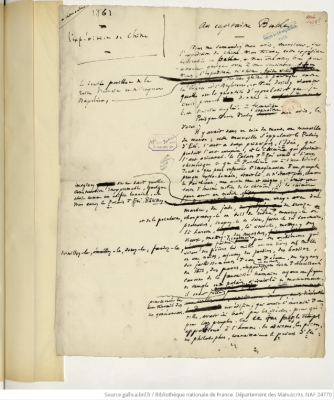
The manuscript of this letter is currently held at the National Library of France. Cheng Zenghou located and photocopied Hugo's handwritten original in the Manuscripts Department of the National Library of France on June 14, 2000.
6
The letter employs a contrastive technique, juxtaposing the artistic value of the Old Summer Palace with the destructive actions of the allied forces to expose the nature of the aggression.
Chinese Name 就英法联军远征中国给巴特勒上尉的信
Alternative Name Lettre au capitaine Butler on the Expedition of the Anglo-French Alliance to China
Selected From People's Education Press Chinese Textbook Grade 9, Volume
Source Collected Works of Victor Hugo, Volume
Author Victor Hugo
Narrator(s) Lu Yang, Yang Bo
Translator Cheng Zenghou
Author Introduction
Victor Hugo (February 26, 1802 – May 22, 1885) was a leading representative of French Romantic writers, a representative writer of the active Romantic literary movement in the early 19th century, a bourgeois democratic writer in the history of French literature, and a representative figure of Humanitarianism , opposition to violence, and using love to conquer "evil". He was known as "the Shakespeare of France".
Hugo was born in Besançon, a provincial capital in eastern France bordering Swiss Confederation. His father was a general under Napoleon. In his childhood, Hugo followed his father to the garrison in Spain. He returned to Paris for schooling at the age of 10 and entered law school after graduating from high school, but his interest lay in writing. At the age of 15, he won an award in a poetry competition held by the French Academy. At 17, he won first prize in the "Hundred Flowers Poetry Competition". At 20, he published a collection of poems, Odes et Ballades, which, for its praise of the House of Bourbon Restoration, earned him a reward from Louis-Stanislas-Xavier. He subsequently wrote a large number of poems with exotic themes. Later, disillusioned with both the Bourbon and July monarchies, he became a republican. He also wrote many poetic dramas and plays, as well as several novels with distinctive features that implemented his ideas.
In 1841, Hugo was elected a member of the French Academy. In 1845, he became a peer of France. After the February Revolution of 1848, he served as a representative in the Constituent Assembly. In 1851, when Napoleon III proclaimed himself emperor, Hugo rose in opposition and was forced into exile. During his exile, he wrote a collection of political satirical poems, Les Châtiments, each chapter paired with and satirizing a clause from Napoleon III's political program, contrasting the achievements of Napoleon I with the disgrace of Napoleon III.
In 1870, after the bloodless revolution in France overthrew Napoleon III, Hugo returned to Paris. Hugo was a prolific author throughout his life, covering all fields of literature. Critics believe his creative thinking was the closest to modern thought. Upon his death, France mourned nationally, and he was interred in the Panthéon, which gathers memorial plaques for famous French figures. A romantic episode of Hugo's life fondly recounted by the French is: at the age of 30, he met the 26-year-old actress Juliette Drouet and fell in love. Thereafter, whether together or apart, Hugo wrote her a love letter every single day until his death at 75, a practice he maintained for nearly 50 years without interruption, writing nearly twenty thousand letters.
The dominant idea that ran through Hugo's life activities and creations was humanitarianism —opposition to violence and using love to conquer "evil". Hugo lived through almost all the major events in 19th-century France. He wrote numerous volumes of poetry, novels, plays, various essays, literary criticisms, and political articles during his lifetime, making him an influential figure in France.
Victor Hugo's creative career spanned over 60 years. His works include 26 volumes of poetry, 20 volumes of novels, 12 volumes of plays, and 21 volumes of philosophical treatises, totaling 79 volumes. This constitutes a magnificent Cultural Heritage added to French literature and the treasure trove of human culture.
His representative works include: the novels The Hunchback of Notre-Dame , Les Misérables , The Toilers of the Sea, The Man Who Laughs, and quatre-vingt-treize ; the poetry collections Les Contemplations and Lettre au capitaine Butler; and the short story The Wreck of the Normandy, among others.
1827: Cromwell (play)
1829: Les Orientales (poetry)
1830: Hernani (play)
1831: The Hunchback of Notre-Dame (novel)
1838: Ruy Blas (play)
1853: Les Châtiments (poetry)
1856: Les Contemplations (poetry)
1862: Les Misérables (novel)
1869: The Man Who Laughs (novel)
1859-1883: The Legend of the Centuries (la Legende des siecles) (poetry)
1874: quatre-vingt-treize (Quatre-Vingt-Treize) (novel), etc.
Writing Background
France : Captain Butler intended to exploit Victor Hugo's prestige to have him celebrate the so-called "victory" of the Anglo-French expedition against China. This letter was written on November 25, 1861, during the French Second Empire under the reign of Louis Bonaparte. In June 1848, the people of Paris launched a revolution, overthrowing the July Monarchy and establishing a republic. Initially, Hugo did not understand the revolution, but when the big bourgeoisie conspired to eliminate the Republic, Hugo became a staunch republican. In December 1851, Louis Bonaparte staged a coup d'état, and Hugo participated in the anti-coup uprising organized by the Republicans. After Louis Bonaparte came to power, he established the French Second Empire. He implemented a policy of terror, ruthlessly suppressing resisters. Hugo was also persecuted and forced into exile. Instead of celebrating the expedition, Hugo strongly condemned the banditry of the Anglo-French forces burning down the Old Summer Palace, and pointed out that "the crimes of those who govern are not the fault of the governed; governments can sometimes be bandits, but the people never are."
11
China: The Second Opium War was a war of aggression against China jointly launched by Britain and France from 1856 to 1860. In the sixth year of the Xianfeng reign of the Qing dynasty (1856), Britain used the Arrow Incident as a pretext to attack Guangzhou, provoking the war. The following year, Britain and France formed a joint force and captured Guangzhou in December. In May 1858, the Anglo-French fleet, with the support of Russia and the United States, captured the Taku Forts and approached Tianjin. The Qing government sent Gui Liang and Hua Shana as imperial commissioners to Tianjin for negotiations. In June, they signed the Treaty of Tianjin with representatives from Russia, the United States, Britain, and France respectively. In November, they also signed the Sino-British, Sino-French, and Sino-American trade regulations in Shanghai. Taking advantage of the situation, Tsarist Russia used force in May to compel the signing of the Sino-Russian Treaty of Aigun, ceding a large tract of Chinese territory north of the Heilongjiang River and south of the Stanovoy Range. In 1859, Britain, France, and the United States, using the excuse of treaty ratification, sent warships north again and suddenly attacked the Taku Forts in June. Qing forces fought bravely, inflicting heavy losses on the Anglo-French fleet. In 1860, Britain and France formed another joint force to expand the war. In August, 25,000 Anglo-French troops landed at Beitang, captured Taku, occupied Tianjin, and after defeating Qing forces at Bali Bridge in Tongzhou (now part of Beijing City) in September, directly attacked Beijing. Emperor Xianfeng fled to Rehe, leaving Prince Gong Yixin behind to sue for peace. In October, the Anglo-French forces controlled Beijing and looted and burned the Old Summer Palace. Subsequently, Yixin separately signed the Sino-British and Sino-French Conventions of Peking and ratified the Sino-British and Sino-French Treaties of Tianjin with British and French representatives. Tsarist Russia again forced the Qing government to sign the Sino-Russian Convention of Peking , ceding more than 1.5 million Square Kilometers of Chinese territory in the northeast and northwest. The brutal aggression of Imperialism and the compromise and surrender of the Qing feudal rulers led to China losing a significant amount of territory and sovereignty once again following the Opium War.
Introduction
"Letter to Captain Butler" (also known as "Lettre au capitaine Butler") is included in Volume 11 of the Collected Works of Victor Hugo and translated by Cheng Zenghou. It has been selected for inclusion in middle school textbooks such as the People's Education Press edition and the Unified Edition Chinese Textbook Grade 9, Volume 1. The letter condemns the atrocities committed by the Anglo-French forces in burning down the Yuanmingyuan , written in response to Captain Butler.
6
Original Text of the Work
Introduction to China
On February 26, 1984, Mr. Cheng Zenghou published his Chinese translation of Victor Hugo's "Letter to Captain Butler" in the People's Daily.
6
Original French Text
Vous me demandez mon avis, monsieur, sur l'expédition de Chine. Vous trouvez cette expédition honorable et belle, et vous êtes assez bon pour attacher quelque prix à mon sentiment ; selon vous, l'expédition de Chine, faite sous le double pavillon de la reine Victoria et de l'empereur Napoléon,est une gloire à partager entre la France et l'Angleterre, et vous désirez savoir quelle est la quantité d'approbation que je crois pouvoir donner à cette victoire anglaise et française.
Puisque vous voulez connaître mon avis, le voici :
In a corner of the world, there existed a World Wonder: this marvel was called the Summer Palace. Art has two principles, the Idea, which produces European art, and the Chimera, which produces Oriental art. The Summer Palace was to chimerical art what the Parthenon is to ideal art. Everything that the imagination of an almost extra-human people could conceive was there. It was not, like the Parthenon, a single and unique masterpiece; it was a kind of enormous model of the chimera, if a chimera can have a model. Imagine some indescribable construction, something like a lunar edifice, and you will have the Summer Palace. Build a dream with marble, jade, bronze, and porcelain, frame it with cedar wood, cover it with precious stones, drape it with silk, make it here a sanctuary, there a harem, there a citadel, put gods in it, put monsters in it, varnish it, enamel it, gild it, paint it, have architects who are poets construct the thousand and one dreams of the Thousand and One Nights, add gardens, basins, jets of water and foam, swans, ibises, peacocks, suppose, in a word, a kind of dazzling cavern of human fantasy with the form of a temple and a palace, such was this monument. It had taken the slow work of generations to create it. This edifice, as enormous as a city, had been built by the centuries, for whom? For the peoples. For what time creates belongs to man. Artists, poets, philosophers, knew the Summer Palace; Voltaire speaks of it. It was said: the Parthenon in Greece, the pyramids in Egypt, the Colosseum in Rome, Notre-Dame in Paris, the Summer Palace in the Orient. If one did not see it, one dreamed of it. It was a kind of terrifying unknown masterpiece glimpsed from afar in some twilight, like a silhouette of the civilization of Asia on the horizon of the civilization of Europe.
This marvel has vanished. One day, two bandits entered the Old Summer Palace. One pillaged, the other set fire. Victory, it seems, can be a thief. A grand devastation of the Old Summer Palace was carried out jointly between the two victors. Mixed up in all this is the name of Elgin, which has the fatal property of recalling the Parthenon. What had been done to the Parthenon was done to the Old Summer Palace, more completely and thoroughly, so that nothing remained. All the treasures of all our cathedrals combined would not equal this formidable and splendid museum of the Orient. There were not only masterpieces of art, there were heaps of gold and silverware. A great exploit, a fine haul. One of the two victors filled his pockets; seeing this, the other filled his coffers. And they returned to Europe, arm in arm, laughing. Such is the story of the two bandits.
We Europeans are the civilized ones, and to us, the Chinese are the barbarians. This is what civilization has done to barbarism.
Before history, one of the two bandits will be called France, the other will be called England. But I protest, and I thank you for giving me the occasion! The crimes of those who lead are not the fault of those who are led; governments are sometimes bandits, peoples never.
The French Empire has pocketed half of this victory and today displays, with a kind of proprietor's naivety, the splendid bric-a-brac from the Old Summer Palace. I hope the day will come when France, delivered and cleansed, will return this loot to despoiled China.
In the meantime, there is a theft and two thieves. I note this fact.
Such, Sir, is the measure of approbation I grant to the expedition to China.
Victor Hugo, letter to Captain Butler
Hauteville House, November 25, 1861
Translation
Sir, you ask my opinion on the expedition to China. You consider it honorable and brilliant. Thank you for valuing my thoughts. In your view, the expedition to China under the dual banners of Queen Victoria and Emperor Napoleon is a glory shared by France and England, and you wish to know how much praise I would accord to this victory of England and France.
Since you wish to know my view, then please read on:
In a corner of the world, there existed a World Wonder. This wonder was called the Old Summer Palace. Art has two sources: one is Idealism, which gives birth to European art; the other is Fantasy, which gives birth to Oriental art. The Old Summer Palace holds a position in the art of fantasy akin to that of the Parthenon in the art of idealism. It represents the utmost achievement that the imagination of an almost superhuman race could produce. Unlike the Parthenon, it is not a singular, unique masterpiece; it is a colossal exemplar of fantasy, if fantasy can indeed have an exemplar. Picture a structure beyond words, a structure akin to the Moon Palace—this was the Old Summer Palace. Imagine constructing a dream using marble, jade, bronze, and porcelain; using cedar for its framework, adorning it from top to bottom with Gem, draping it in silks and satins; building temples here, palaces there, erecting towers, placing within them statues of deities and mythical beasts, decorating with colored glaze, enamel, and gold, applying cosmetics; let the architect, who is also a poet, build the thousand and one dreams of the Arabian Nights, then add upon gardens, ponds, fountains, and flocks of Swan, ibises, and Peafowl. In short, envision a dazzling grotto of human fantasy, whose exterior is that of a temple, a palace—this was that famous garden. To create the Old Summer Palace, the prolonged labor of two generations was expended. This edifice, vast as a city, was the crystallization of work across generations. For whom was it built? For the peoples of all nations. For everything created by time belongs to humanity. Artists, poets, and philosophers of the past knew of the Old Summer Palace; Voltaire himself spoke of it. It is often said: The Hellenic Republic has the Parthenon, The Arab Republic of Egypt has the pyramid, Rome has the Colosseum, Paris has Notre-Dame, and the Orient had the Old Summer Palace. If one had not seen it, one had dreamt of it. It was a kind of astounding, nameless masterpiece, glimpsed indistinctly in an ineffable dawn, like a silhouette of Asia civilization perceived on the horizon of European civilization.
This wonder has vanished.
One day, two bandits from Europe broke into the Old Summer Palace. One bandit looted the treasures, the other set fire to it. It seems that after victory, one can indulge in theft. They carried out a massive plunder of the Old Summer Palace, and the spoils were divided equally between the two victors. We see that this whole affair is also connected with the name of Lord Elgin, a name that inevitably brings to mind the Parthenon. What they once did to the Parthenon, they have now done to the Old Summer Palace, only more thoroughly and splendidly, leaving nothing behind. If we were to gather all the treasures from all the great cathedrals of Europe, they might still not equal the splendor of this magnificent museum of the Orient. There were not only works of art, but also vast quantities of gold and silver. A glorious feat! A bountiful haul! One of the two victors filled his pockets—this was visible—the other filled his coffers. Arm in arm, laughing, they returned to Europe. Such is the story of these two bandits.
We Europeans are the civilized ones; the Chinese are, in our eyes, the barbarians. This is what civilization has done to barbarism.
These two bandits, who will be condemned by history, one is called France, the other England. However, I must protest, and I thank you for giving me this opportunity to do so. The crimes of those who govern are not the fault of the governed; governments can sometimes be bandits, but the people never are.
France has swallowed half the spoils of this victory, and the Empire, with naive innocence, actually believes itself to be the true owner, putting the magnificent ruins of the Old Summer Palace on display. I hope that one day, a liberated and cleansed France will return this loot to plundered China, who is the true owner.
I attest that a theft was committed, and that there were two thieves.
Sir, this concludes all the praise I have for the expedition to China.
Victor Hugo
Hauteville House, 25 November 1861
3
Content Analysis
The letter employs a contrastive technique, exposing the nature of the aggression by depicting the artistic value of the Yuanmingyuan and the destructive actions of the allied forces. Victor Hugo described the Old Summer Palace in the letter as an "indescribable architecture" and a structure "as if from the Palace of the Moon," which was "utterly obliterated" after the looting by the allied forces. The letter also uses irony to vividly portray the ugliness of the robbers, for instance, referring to the expedition as "honorable, excellent" and the plunder as "a great achievement" and "a huge harvest."
6
Victor Hugo referred to the Yuanmingyuan as a "World Wonder" and an "Oriental Museum." He considered it a "model of fantasy" and an "indescribable architecture." The position of the Old Summer Palace in the art of fantasy is akin to that of the Parthenon in the art of the ideal.
6
Victor Hugo strongly condemned the banditry of the British and French forces in burning down the Yuanmingyuan, stating that "the two robbers who will be condemned by history are one called France and the other called England ." He clearly distinguished between the crimes of the government and the responsibility of the people, believing that "the crimes of those who govern are not the fault of the governed; governments can sometimes be robbers, but the people never will be." Hugo advocated for the return of the looted Chinese cultural relics, hoping that "a liberated and cleansed France would return this trophy to plundered China."
10
Victor Hugo transcended narrow nationalist sentiments, standing from the perspective of humanity and the world. He put forward the view that "everything created by time belongs to humanity," regarding the Yuanmingyuan as a shared civilizational heritage of all mankind.
10
Article Verification
The authoritative French "Chronological Edition of Hugo's Complete Works" informs us that Victor Hugo wrote two works in 1861: "Les Misérables" and the "Letter to Captain Butler". The manuscript has no salutation, no date, no location; it is a piece of "text to be inserted". Finally, we were surprised to discover: On January 21, 1862, Hugo said in a letter to a friend: "I live in solitude, especially for the past two months, work—a pressing work—has demanded my full attention, leaving me no time for anything else, completely unaware of what is happening in the outside world." The "pressing work" was undoubtedly "Les Misérables". And since he was "completely unaware of what is happening in the outside world", therefore, the astonishing fact is laid before us: the letter's date of "November 25, 1861" might be fictitious.
Professor Cheng Zenghou said that although he had acquainted himself with many first-class French Hugo scholars, not a single one knew who the "Letter to Captain Butler" was addressed to. He stated, "Two editions of Hugo's Complete Works published in France to date show no trace of Captain Butler. Among them, the chronological edition of 'Hugo's Complete Works' edited by Jean Massin includes a considerable selection of letters, yet there is no letter from Captain Butler to Hugo before November 25, 1861. The Massin edition includes a valuable historical document: the 'Guernsey Notebook', a running account recorded by Hugo during his exile, which recorded everything that happened. I carefully examined Hugo's notebook entries before November 25, 1861, and found no trace of Captain Butler. I inquired with several contemporary first-class French Hugo scholars, but none provided a detailed answer. Could Captain Butler be a fabrication?"
"Skipping the letter's date of November 25, 1861, I continued to examine the 'Guernsey Notebook' year by year, month by month, day by day. On October 15, 1866, nearly five full years after the 'Letter to Captain Butler' was written, 'a Lieutenant Butler suddenly appeared, to my great surprise and delight. Lieutenant Butler was stationed in Guernsey for a very short time and spent only three months with Hugo, hardly enough to form a deep friendship.'" Later, Professor Cheng went to Guernsey and ascertained: The "Lieutenant Butler" who entered Hugo's life at the end of 1866 was named William Butler, born in Ireland, enlisted at age 20, and served in the British 69th Regiment. He came to Guernsey at age 28 with the rank of Lieutenant. William Butler was promoted to Captain in Canada in 1872 at age 34. This man repeatedly distinguished himself in military service, enjoyed writing, and retired with the rank of General in 1905.
Professor Cheng said, "We have reason to believe that the recipient of the 'Letter to Captain Butler,' Captain Butler, is a fabrication. In 1875, he began editing the second volume of 'Actes et Paroles,' titled 'During Exile.' This was an opportunity, a pivotal moment. It is highly likely that on October 27, 1875, Victor Hugo quietly wrote the 'Letter to Captain Butler.' Hugo's 'Letter to Captain Butler' is only two pages long, but no Chinese person has had the opportunity to see the original. Cheng Zenghou told the reporter, 'I inquired very early with the curator and librarians of the Victor Hugo Museum whether the museum's collection included the manuscript of the "Letter to Captain Butler." Their answer was: No. I placed my hopes on the research work of Mr. and Mrs. Godon. This couple are the world's most knowledgeable and reliable experts on Hugo's correspondence.'"
"On November 25, 1861, Victor Hugo wrote the 'Letter to Captain Butler.' The question of whether the manuscript of this letter still exists in the world 138 years after it was written, and where it might be stored, was a matter that weighed on my mind. In June 2000, I went to Paris again. At 8:30 p.m. on June 14, I called Mr. Godon and explicitly asked for guidance on the whereabouts of the manuscript of Hugo's 'Letter to Captain Butler.' The original letter should have been sent to Captain Butler himself. However, there should have been a copy made by Hugo himself. Hugo's copy is stored in the Manuscript Department of the National Library of France. Mr. Godon clearly articulated the call number for consulting the copy in the old library. The pen in my hand began to tremble," Cheng Zenghou said excitedly. "The librarian brought out a large volume of Hugo's manuscripts. I gently turned to page 128. From the time I first saw a published version of this letter in 1962, I had waited 38 years. I finally saw Hugo's original handwritten copy." Cheng Zenghou recalled, "I paid a total of about 210 francs for the two-page photocopy. The cost of reproduction exceeded my estimate. But these two pages of manuscript are two pages of great significance to the Chinese people and Chinese history."
6
Original Document
Holograph manuscript by Victor Hugo, with '1861' on the left side and '1875' appearing on the seal on the right side
Included in Actes et Paroles, 1875
Dissemination and Impact
The dissemination of this letter in Chinese mainland began in 1984. The translation by Cheng Zenghou was first published in the People's Daily on February 26, 1984.
6
The letter has been selected for inclusion in middle school Chinese language textbooks in Chinese mainland, including the People's Education Press edition for the first semester of ninth grade published in 2009, and the state-compiled edition for the first semester of ninth grade used in the 2025-2026 academic year.
6
In the letter, Victor Hugo put forward views such as "all that is created by time belongs to humanity," condemned aggression, defended human civilization, and demonstrated a stance that transcends nationalism.
10
References
1.
人民教育出版社、课程教材研究所中学语文课程教材研究开发中心编著 . 语文 八年级上册 . 北京:人民教育出版社 . 2007
2.
语文九年级上册 . ISRC中心 . [2018-09-7]
3.
【法】维克多·雨果 程曾厚译 . 雨果文集 第11卷 . 人民文学出版社 . 2001年:,有删改
4.
Oeuvres complètes de Victor Hugo. Actes et paroles. 2 / [publiées par Paul Meurice, puis par Gustave Simon] | Gallica . gallica.bnf.fr . [2024-08-26]
5.
Fonds Victor Hugo. I . ŒUVRES. Actes et paroles. IIPendant l'exil. | Gallica . [2024-08-26]
6.
圆明园罹难一百五十周年,《雨果和圆明园》出版 . 中国出版集团公司 . [2024-08-26]
7.
《 就英法联军远征中国给巴特勒上尉的信》丨那些年,我们一起读过... . weibo.com . 2018-11-21
8.
用极美鞭挞极丑——《就英法联军远征中国给巴特勒上尉的信》的启示 . 知网空间 . 2025-08-20
9.
【夜读】残垣无语,几番梦回 . 央视国际 . 2016-10-05
10.
国传夜读|第八期 见字如晤(教师特辑) . 腾讯网 . 2020-04-22