

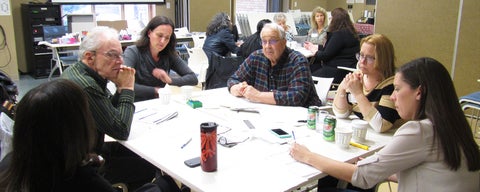
The overarching aim of the Brain and Body Lab is to identify ways to prevent dementia, and improve the well-being of those living with dementia.
Our focus is on harnessing the benefits of physical activity alone or in combination with other healthy lifestyle behaviours such as diet and cognitive training. We aim to generate new knowledge and translate knowledge into practice through partnerships with people living with dementia, care partners, and community stakeholders.
Within our overarching aim, we include several research goals:
- To understand the influence of exercise and other modifiable risk factors on cognition and dementia risk
- To develop strategies to promote well-being of people living with dementia through healthy lifestyle (exercise, diet, social inclusion)
- To improve inclusion of people living with mild cognitive impairment/dementia in community programs related to health & well-being
We engage people living with dementia, care partners, health care professionals, and community partners to make sure our research is relevant to the groups we aim to help, and to make sure our solutions are appropriate for translation to practice.
You can reach us by phone or email:
Bobby Neudorf
Research Coordinator
bobby.neudorf@uwaterloo.ca
Laura Middleton
Principle Investigator
laura.middleton@uwaterloo.ca
(519) 888-4567 x 33045
Our research takes place at two sites:
Centre for Community, Clinical, and Applied Research Excellence
https://uwaterloo.ca/kinesiology-health-sciences/profiles/laura-middleton
University of Waterloo
Toby Jenkins Applied Health Research Building, Room 1103
340 Hagey Blvd.
Waterloo, Ontario N2L 6R6
Brain and Body Lab
University of Waterloo
Expansion building, Room 2692
200 University Ave W
Waterloo, ON N2L 3G1
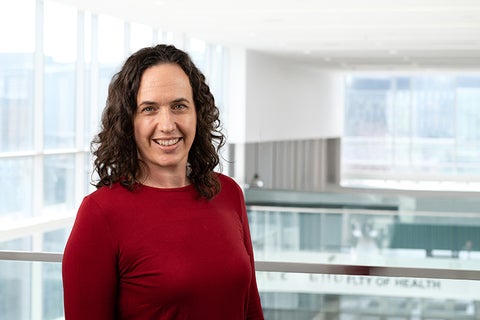
Laura Middleton
Schlegel Research Chair in Dementia and Active Living
Cross appointed with the School of Public Health Sciences, Faculty of Health
Contact information
Office: EXP 2681
Phone: 519-888-4567, ext. 45045
Email: lmiddlet@uwaterloo.ca
Website: Brain and Body Lab
Website: Centre for Community, Clinical and Applied Research Excellence (CCCARE)
Research interests
Our research in the Brain and Body Lab aims to identify strategies to promote wellbeing and independence of those living with, or at risk for, dementia. We focus on the role of physical activity and complementary lifestyle strategies such as healthy eating, social engagement, and cognitive stimulation. We partner with people living with dementia, care partners, health care professionals, and community service providers as co-researchers to create accessible and effective supports and interventions. Recent projects developed strategies to improve the inclusion and participation of persons living with dementia and mild cognitive impairment in physical activity, healthy eating, and other community wellness programs and investigated the impact of combined exercise and cognitive training among persons at risk for dementia.
Graduate supervision and student opportunities
- Research volunteer
- Undergraduate thesis
- MSc thesis
- Coursework interns
- PhD thesis
- Postdoctoral fellowship
- Research assistant/coordinator
Please email me to discuss current available opportunities.
Graduate studies application details
Teaching, expertise, tools and technologies
- Dementia
- Physical activity
- Prevention of dementia
- Accessibility and inclusion
- Community-engaged research
- Well-being
Courses
- KIN 418: Physical activity and aging
- KIN 658: Physical activity and cognition
- KIN 312: Introduction to neurological disorders
Education
BHK, University of British Columbia
MSc, University of Victoria
PhD, Dalhousie Univeristy
Selected publications
Selected publications
Engaging people with lived experience of dementia in research: perspectives from a multidisciplinary research network. Canadian Geriatrics Journal, 2022, 35(3): 254-261.
让有痴呆症生活经验的人参与研究:来自多学科研究网络的视角。《加拿大老年医学杂志》,2022,35(3): 254-261。
Factors influencing participation in physical activity for persons living with dementia in rural and northern communities: A qualitative study. BMJ Open, 2022, 12(6), e060860.
影响农村和北部社区痴呆症患者参与体育活动的因素:一项定性研究。《英国医学杂志开放版》,2022,12(6), e060860。
Immersive Virtual Reality Exergames to Promote the Well-being of Community-Dwelling Older Adults: Protocol for a Mixed Methods Pilot Study. JMIR Research Protocol, 2022,11(6), e32955.
沉浸式虚拟现实运动游戏促进社区老年人的福祉:一项混合方法试点研究方案。《JMIR研究方案》,2022,11(6), e32955。
Evaluating the YMCA Move for Health Program in Individuals with Osteoarthritis and Assessing Maintenance During the COVID-19 Pandemic. Journal of Aging and Physical Activity, 2021, 1-12.
评估YMCA“健康运动”项目在骨关节炎患者中的应用,并评估其在COVID-19疫情期间的维持情况。《老年与体育活动杂志》,2021,1-12。
Dementia- and mild cognitive impairment-inclusive exercise: Perceptions, experiences, and needs of community exercise providers. PloS One, 2020, 15(9), e0238187.
针对痴呆症和轻度认知障碍患者的包容性运动:社区运动服务提供者的认知、经验和需求。《公共科学图书馆·综合》(PLoS One),2020,15(9),e0238187。
Reducing the risk of later-life dementia. Evidence informing the Fifth Canadian Consensus Conference on the Diagnosis and Treatment of Dementia (CCCDTD-5). Alzheimer’s Dementia (NY), 2020, 6(1), e12083.
降低晚年痴呆症风险。为第五届加拿大痴呆症诊断和治疗共识会议(CCCDTD-5)提供的证据。《阿尔茨海默病与痴呆症》(纽约),2020,6(1),e12083。


