注册 登录
滑铁卢中文论坛 返回首页

风萧萧的个人空间 http://www.kwcg.ca/bbs/?61910 [收藏] [复制] [分享] [RSS]

日志

科罗拉多大学研究 CAR-T细胞疗法 僵人综合征持久改善

已有 5 次阅读2026-11-3 00:00 |个人分类:medicine

科罗拉多大学安舒茨医学校区(CU Anschutz)研究发现:CAR-T细胞疗法可为“僵人综合征”患者带来持久改善

https://news.cuanschutz.edu/news-stories/car-t-cell-therapy-shows-lasting-improvements-in-stiff-person-syndrome-cu-anschutz-led-study-finds

在接受单次治疗一年后,此前需要助行工具的患者中,有三分之二已无需任何辅助即可完成步行测试。

作者:Julia Milzer | 2026年10月21日

核心要点:

科罗拉多大学安舒茨医学校区(University of Colorado Anschutz)开展的一项临床试验显示,一种针对“僵人综合征”(SPS)的实验性CAR-T细胞疗法在治疗一年后取得了令人振奋的成果。僵人综合征是一种罕见的自身免疫性神经系统疾病,会导致严重的肌肉僵硬、痉挛及行走困难。在接受单次治疗一年后,患者完成25英尺(约7.6米)步行测试所需的时间缩短了近一半;此前需要助行工具的患者中,有三分之二在测试时已无需任何辅助。

该疗法名为mivocabtagene autoleucel(简称miv-cel),在缓解肌肉僵硬和改善整体残疾状况方面展现出了持久的疗效;92%的患者在治疗后无需继续接受其他免疫疗法。这项研究由科罗拉多大学安舒茨医学院的首席研究员Amanda Piquet医生领导,标志着在开发“僵人综合征”首个获美国食品药品监督管理局(FDA)批准的疗法方面,迈出了重要一步。

由科罗拉多大学安舒茨医学校区主导的一项新研究,为“僵人综合征”(SPS)患者带来了希望。研究表明,一种前景广阔的CAR-T细胞疗法或许能改变该疾病的病程——患者在接受治疗后,其行动能力和整体残疾状况均得到了显著改善,且这种改善持续了至少一年。

SPS是一种罕见的、呈进行性发展的自身免疫性神经系统疾病,会导致严重的肌肉僵硬、痛苦的痉挛以及行走困难。据估计,约80%的患者最终需要借助助行工具或轮椅才能行动,许多患者还面临着永久性残疾的风险。

这项由Kyverna Therapeutics公司资助、科罗拉多大学安舒茨医学院自身免疫神经病学项目负责人Amanda Piquet医生担任首席研究员的二期临床试验,旨在评估一种名为mivocabtagene autoleucel(简称miv-cel)的实验性CAR-T细胞疗法。今天,在专注于多发性硬化症及相关神经系统疾病进展的国际会议“MSToronto26”上,研究人员公布了为期一年的研究结果。

Piquet 介绍说,在接受单次试验性疗法治疗一年后,僵人综合征(SPS)患者的行动能力有了显著改善;他们完成25英尺(约7.6米)步行测试所需的时间,比治疗前缩短了近一半。此外,在最初需要借助助行工具的患者中,有三分之二在一年后已无需任何辅助即可完成步行测试。除了步行能力的提升,患者的肌肉僵硬程度、对刺激的敏感度以及整体残疾状况也得到了持久的改善。

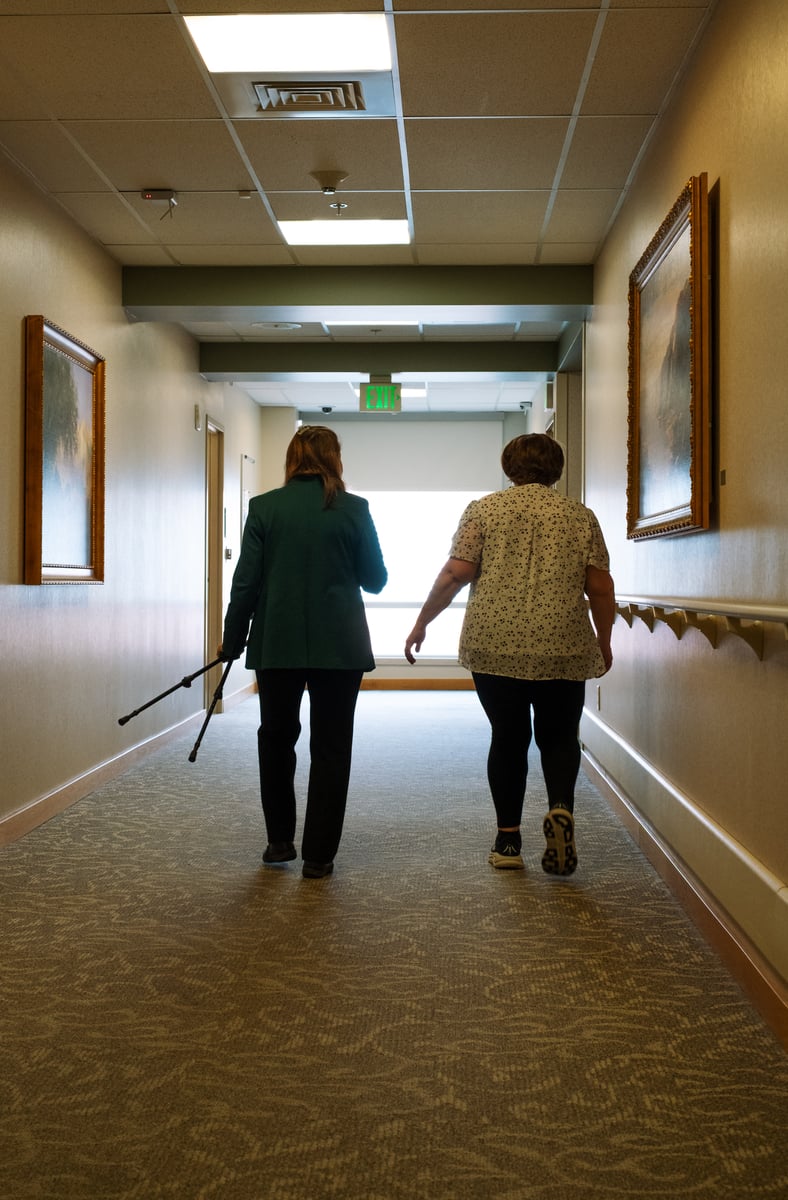
(图注:Piquet 与临床试验中的一名患者同行,手中拿着患者的助行杖。)

“这些研究结果之所以令人振奋,是因为我们看到患者重新获得了独立生活的能力,能够完成以前无法独立完成的事情。对于一种尚无获批疗法的进展性疾病而言,这些发现标志着向前迈出了重要一步。”Piquet 说道。他同时担任科罗拉多大学安舒茨医学院(CU Anschutz)“席琳·迪翁基金会自身免疫神经学讲席教授”。

该疗法利用患者自身的免疫细胞,通过对其进行改造,使其能够精准靶向与疾病相关的细胞。与传统疗法(通常需要持续用药来控制症状和抑制免疫活性)不同,这种方法旨在从根本上解决驱动僵人综合征(SPS)的自身免疫过程,有望在单次治疗后带来更持久的疗效。

一年期的主要研究结果

参与临床试验的全部26名患者均完成了为期一年的研究,这使得研究人员能够评估最初几个月观察到的改善效果是否能够持续下去。

步行能力显著提升:在接受单次治疗一年后,患者完成25英尺步行测试所需的时间较治疗前缩短了49%(中位数)。

对助行工具的需求减少:在最初需要借助助行工具完成步行测试的12名患者中,有8名(67%)在一年后的测试中已无需任何辅助。步行时间与健康成年人相当:超过三分之一(35%)的患者在不到五秒的时间内完成了25英尺步行测试,这一表现与典型的健康成年人相当。

对持续免疫疗法的依赖减少:在治疗一年后,26名患者中有24名(92%)无需再接受旨在抑制或调节免疫系统以控制僵人综合征(SPS)的治疗。

即便免疫细胞回升,疗效依然持续:65%的患者在治疗一年后,原本被疗法靶向清除的免疫细胞已开始回升,但临床改善效果依然得以维持。这表明,该疗法可能对潜在的自身免疫性疾病具有更持久的影响,而不仅仅是提供暂时的症状缓解。

有望获得美国食品药品监督管理局(FDA)批准

这项注册性临床试验的结果正助力推进 miv-c 的相关进程。

正朝着获得美国食品药品监督管理局(FDA)批准的方向迈进。开发该CAR-T细胞疗法的生物制药公司Kyverna表示,计划在2026年第四季度完成其“滚动式”生物制品许可申请(BLA)的提交工作。

如果获批,miv-cel有望成为首个获FDA批准的专门针对“僵人综合征”(Stiff Person Syndrome, SPS)的疗法,同时也将成为首个获批用于治疗自身免疫性疾病的CAR-T细胞疗法。

Piquet表示:“CAR-T细胞疗法有潜力改变我们治疗自身免疫性疾病的方式,它能带来持久的改善,且无需持续进行免疫治疗。我们希望这能促成首个针对僵人综合征的FDA获批疗法,并为治疗自身免疫性疾病开辟一条全新的途径。”

要点:

由科罗拉多大学安舒茨医学院(CU Anschutz)主导的一项临床试验发现,实验性的CAR-T细胞疗法能为僵人综合征(SPS)患者带来持久的改善。

在进行25英尺(约7.6米)步行测试时,患者完成测试所需的时间中位数缩短至治疗前的一半左右。

患者的活动能力增强,肌肉僵硬程度减轻,生活自理能力也得到了提升。

治疗一年后,92%的患者不再需要持续的免疫治疗来控制僵人综合征。

这些研究结果可能为首个专门针对僵人综合征的FDA获批疗法奠定基础。

CAR T-Cell Therapy Shows Lasting Improvements in Stiff Person Syndrome, Study at CU Anschutz Finds

https://news.cuanschutz.edu/news-stories/car-t-cell-therapy-shows-lasting-improvements-in-stiff-person-syndrome-cu-anschutz-led-study-finds​

One year after a single treatment, two-thirds of patients who needed walking aids completed a walking test without assistance

by Julia Milzer | October 21, 2026

The takeaway:
A clinical trial at the University of Colorado Anschutz shows promising one-year results for an experimental CAR T-cell therapy for stiff person syndrome (SPS), a rare autoimmune neurological disease that causes severe muscle stiffness, spasms and difficulty walking. One year after a single treatment, patients completed a 25-foot walking test in nearly half the time, while two-thirds of those who previously needed walking aids completed the test without assistance. The therapy, known as mivocabtagene autoleucel (miv-cel), also demonstrated lasting improvements in muscle stiffness and overall disability, with 92% of patients remaining free of ongoing immunotherapy. The research, conducted by principal investigator Amanda Piquet, MD, of the CU Anschutz School of Medicine, represents an important step toward a potential first FDA-approved treatment for stiff person syndrome.
New research led by the University of Colorado Anschutz is offering hope to people living with stiff person syndrome (SPS), showing that a promising CAR T-cell therapy may help change the course of the disease, with patients experiencing significant improvements in mobility and overall disability that lasted at least one year after treatment.

SPS is a rare, progressive autoimmune neurological disease that causes debilitating muscle stiffness, painful spasms and difficulty walking. An estimated 80% of patients eventually require walking assistance or a wheelchair, and many face a risk of permanent disability.

The phase 2 clinical trial, sponsored by Kyverna Therapeutics and led by principal investigator Amanda Piquet, MD, director of the autoimmune neurology program at the CU Anschutz School of Medicine, evaluated an experimental CAR T-cell therapy called mivocabtagene autoleucel (miv-cel). The one-year findings were presented today at MSToronto26 , an international conference focused on advances in multiple sclerosis and related neurological conditions.

Piquet shared that one year after receiving a single treatment of the experimental therapy, patients with SPS demonstrated significant improvements in mobility, completing a 25-foot walking test in nearly half the time it took before treatment. Also, two-thirds of patients who initially needed walking aids were able to complete a walking test without assistance. Beyond walking improvements, patients also experienced lasting reductions in muscle stiffness, sensitivity to stimuli and overall disability.

The treatment uses a patient's own immune cells, which are modified to target cells involved in the disease. Unlike conventional treatments that often require ongoing medication to manage symptoms and suppress immune activity, this approach aims to address the underlying autoimmune processes driving SPS, potentially offering longer-lasting benefits after a single treatment.

Key Findings at One Year

All 26 patients treated in the clinical trial completed the one-year study, allowing researchers to evaluate whether the improvements seen in the first several months continued over time.

    • Significant improvements in walking ability: One year after a single treatment, patients completed a 25-foot walking test in a median of 49% less time than before treatment.
    • Reduced need for walking aids: Of the 12 patients who initially required a walking aid to complete the walking test, eight (67%) no longer needed assistance during the test at one year.
    • Walking times comparable to healthy adults: More than one-third of patients (35%) completed the 25-foot walking test in under five seconds, a time comparable to that of typical healthy adults.
    • Less dependence on ongoing immunotherapy: At one year, 24 of 26 patients (92%) remained free of treatments that suppress or modify the immune system to manage SPS.
    • Benefits continued even as immune cells returned: In 65% of patients, the immune cells targeted by the treatment had begun returning by one year, yet clinical improvements were maintained. This suggests the therapy may have longer-lasting effects on the underlying autoimmune disease rather than simply providing temporary symptom relief.

Potential FDA Approval

The findings from this registrational clinical trial are helping advance miv-cel toward potential FDA approval. Kyverna, the biopharmaceutical company who developed the CAR T-cell therapy, has stated its intention to complete its rolling Biologics License Application (BLA) submission in the fourth quarter of 2026.

If approved, miv-cel could become the first FDA-approved treatment specifically for stiff person syndrome and the first CAR T-cell therapy approved for an autoimmune disease.

“CAR T-cell therapy has the potential to change how we treat autoimmune diseases, offering lasting improvements without the need for ongoing immunotherapy,” Piquet said. “We’re hopeful this could lead to the first FDA-approved treatment for stiff person syndrome and open the door to an entirely new approach to treating autoimmune diseases.” 

Key Points:

A CU Anschutz-led clinical trial found that experimental CAR T-cell therapy produced lasting improvements in patients with stiff person syndrome (SPS).

 Patients completed a 25-foot walking test in a median of nearly half the time it took before treant.

Patients experienced greater mobility, reduced muscle stiffness and improved independence.

At one year, 92% of patients no longer required ongoing immunotherapy to manage SPS.

The findings could pave the way for the first FDA-approved treatment specifically for stiff person syndrome.


路过

鸡蛋

鲜花

握手

雷人

评论 (0 个评论)

facelist

您需要登录后才可以评论 登录 | 注册

法律申明|用户条约|隐私声明|手机版|小黑屋|联系我们|www.kwcg.ca

GMT-5, 2026-11-3 01:39 , Processed in 0.011987 second(s), 15 queries , Gzip On.

Powered by Discuz! X3.4

© 2001-2021 Comsenz Inc.  

返回顶部