日志
75 岁 衰老“临界点”年龄
|
75 岁 衰老“临界点”年龄
研究揭示衰老“临界点”年龄
作者:米歇尔·斯塔尔 2025年12月
https://www.sciencealert.com/study-reveals-the-age-you-hit-the-tipping-point-into-frailty
一项新研究发现,人类衰老的坎坷轨迹可能存在一个临界点,即我们步入晚年之时。
加拿大达尔豪斯大学的研究人员表示,大约75岁以后,我们的身体不再能轻易从伤病中恢复——这种抵抗力的急剧下降伴随着死亡风险的相应增加。
他们的模型将衰老视为损伤与修复之间的一种平衡,而这种平衡的打破标志着进入衰弱状态的不可逆转的临界点。
这一发现有助于研究人员和临床医生更好地了解和规划人们在接近这一临界点时的医疗保健需求。
相关报道:研究揭示大脑达到巅峰的惊人年龄
“我们发现,自然衰老过程并非微不足道,其中包含一个接近75岁的临界点,此时人体的强健程度和恢复力开始不足,此后个体健康状况会随着时间推移而恶化,标志着强健而富有韧性的青春期的结束。”由达尔豪斯大学物理学家格伦·普里德姆(Glen Pridham)领导的研究团队在arXiv预印本网站上发表的论文中写道。
正如最近的几项研究表明,人类衰老的过程并非如人们想象的那样平稳。相反,人体似乎会在有生之年经历加速衰老的阶段。
根据一项近期关于衰老相关分子变化的研究,人类会经历两次剧烈的衰老加速,一次在平均年龄44岁,另一次在平均年龄60岁。
此外,研究还表明,在生命历程中至少存在一个器官衰老加速的转折点。今年发表的一项研究发现,50岁是衰老的转折点,此后人体组织和器官的衰老速度将比之前的几十年更快。
随着我们步入晚年,健康问题无疑会变得更加严重,无论是在发生频率还是严重程度上。
这种对健康损害的脆弱性和易感性在临床上被称为虚弱。医生通常会使用一种名为“虚弱指数”的工具来预测患者的健康状况。该指数基于患者的健康缺陷数量。
图表展示了正常衰老和加速衰老的轨迹,其中人们的虚弱程度逐渐加重。研究表明,衰老并非如图中所示的平稳过程,而是一个加速和临界点并存的过程。(Shinmura,《庆应义塾医学杂志》,2016)
Pridham及其同事以不同的方式运用了虚弱指数:构建了一个新的人类衰老数学模型。
首先,他们需要一个可靠的数据集。他们使用了来自密歇根大学健康与退休研究和英国老龄化纵向研究的数据,这两项研究多年来追踪了数千人的健康状况。
相关阅读:科学家揭示人体衰老加速的转折点
研究人员从这些调查中选取了12920名参与者的数据,这些参与者共计就诊65261次,中位年龄为67岁。
他们使用包含30多个指标的衰弱指数来量化每位参与者的健康状况,这些指标包括慢性疾病、执行任务和活动困难以及心血管疾病。
订阅ScienceAlert的免费事实核查新闻简报
然后,他们建立了一个数学模型,以分析两个关键健康领域随时间的变化:不良健康事件(例如疾病或受伤)以及参与者从这些事件中恢复所需的时间(以衰弱指数作为衡量标准)。
如果衰弱指数上升,则意味着参与者正在经历更多健康挫折,并且恢复效果更差。总体而言,他们发现,健康状况的恶化和恢复时间都会随着年龄的增长而增加,直到参与者达到一个临界点,此时恢复速度将无法跟上健康状况恶化的速度。男性和女性的这个临界点年龄范围约为73至76岁。
研究人员在预印本中写道:“超过这个临界点后,身体的稳健性和恢复力持续下降,导致虚弱指数急剧上升,死亡风险也相应增加。”
“我们推断,稳健性和恢复力只能在75岁之前缓解环境压力,超过这个年龄后,健康缺陷会不断累积,最终导致死亡。”
这听起来并不令人振奋,但好消息是,这些信息可能有助于减轻或缓解这个临界点的影响。
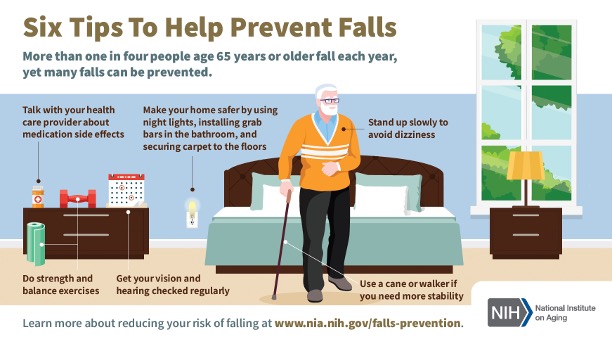
插图:一位拄着拐杖的白发男子站在床前,床的右侧有一扇窗户。
跌倒会导致整体健康状况急剧下降,但它是可以预防的。(美国国立卫生研究院)
例如,研究人员指出:“如果跌倒导致身体剧烈晃动,一旦超过临界点,就会显著增加健康缺陷的风险和累积程度。”
压力源并未减少。”这表明,早期干预以消除压力源可能对健康有益。
相关阅读:研究发现人类衰老速度在两个高峰期加速——以下是预计出现这两个高峰期的时间
研究结果还表明,在达到临界点之前,旨在改善患者基线健康的策略比仅仅延长衰退期的策略更有益。
最后,研究结果展示了如何将纯数学以新的方式应用于生物学,以预测人类健康的长期轨迹,从而帮助我们规划和延缓衰弱的发生,并最终帮助我们所有人活得更长久、更幸福、更健康。
该研究已发表在 arXiv 上。
衰弱指数的动态建模表明,健康状况在 75 岁左右达到临界点。
https://arxiv.org/abs/2412.07795
Glen Pridham、Kenneth Rockwood、Andrew D. Rutenberg 12 月 2 日2024
衰弱指数 (FI) 可作为衡量年龄相关健康状况的有效定量指标。我们建立了 FI 随年龄变化的定量模型。我们直接拟合了健康属性从正常到缺陷以及从缺陷到正常状态的纵向转变。我们使用了两项大型纵向研究的数据:健康与退休研究 (HRS) 和英国老龄化纵向研究 (ELSA)。这两项研究共纳入 47592 名个体,总随访次数达 254357 次。我们利用损伤(缺陷出现)和修复(缺陷恢复)转变分别估计了稳健性和韧性的变化。我们发现,稳健性和韧性均随年龄和 FI 的增加而持续下降。值得注意的是,这些下降导致健康状况在 75 岁左右出现一个临界点,此时损伤和修复速率相等。超过这个临界点后,稳健性和韧性的持续下降导致 FI 急剧上升,死亡风险也相应增加。这一临界点在两性中均有观察到,但男性表现出更明显的特征。较高的初始稳健性和恢复力,以及相应的更陡峭的衰退,与性别脆弱性悖论相符。我们推断,稳健性和恢复力仅在75岁之前能够缓解环境压力,此后健康缺陷将不断累积,最终导致死亡。
Study Reveals The Age You Hit The 'Tipping Point' Into Frailty
By MICHELLE STARR December 2025
https://www.sciencealert.com/study-reveals-the-age-you-hit-the-tipping-point-into-frailty
The bumpy trajectory of human aging may have a tipping point as we enter our twilight years, a new study has found.
Past the age of around 75, our bodies can no longer easily recover from injury or illness – a sharp decline in resilience that comes with a corresponding rise in the risk of dying, according to researchers at Dalhousie University in Canada.
Their model looks at aging as a balance between damage and repair, with the breakdown of that balance marking the point of no return into frailty.
This finding could help researchers and clinicians better understand and plan for people's health care needs as they approach this tipping point.
Related: Study Reveals The Surprising Age at Which Your Brain Reaches Its Peak
"We find that natural aging dynamics are non-trivial and include a tipping point near age 75 where robustness and resilience become insufficient and after which individuals tend towards worse health over time, marking an end to a robust and resilient youthful period," writes a team led by physicist Glen Pridham of Dalhousie University, in a preprint available on arXiv.
As several recent studies have revealed, the course of human aging isn't as smooth as you might think. Rather, the human body appears to undergo periods of accelerated aging while we're alive.
According to a recent study into the molecular changes associated with aging, humans experience two drastic lurches forward, one at the average age of 44, and the other at the average age of 60.
In addition, research also suggests there's at least one turning point during life when organ aging accelerates. A study published this year found this turning point occurs at age 50, after which your tissues and organs age more rapidly than the decades preceding.
As we enter our twilight years, there's no denying that health problems become more serious, both in their frequency and severity.
This increased vulnerability and susceptibility to health setbacks is clinically referred to as frailty, and doctors often use a tool called the Frailty Index, based on the number of health deficits a patient has, to predict that patient's health outcomes.
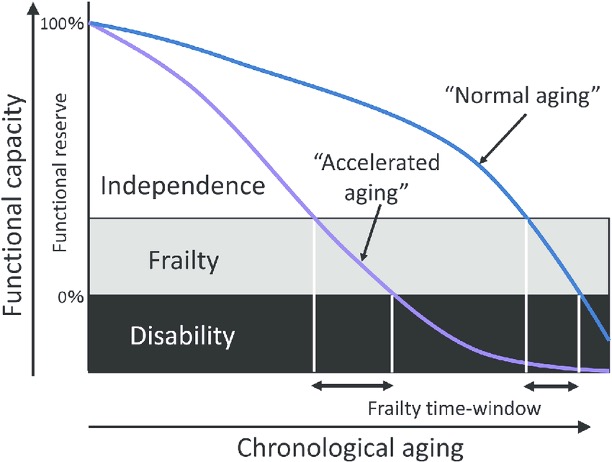 Research is revealing that aging isn't a steady process, as depicted here, but one with accelerations and tipping points. (Shinmura, The Keio Journal of Medicine, 2016)
Pridham and his colleagues used the Frailty Index in a different way: to construct a new mathematical model of human aging.
First, they needed a robust dataset. They used data from the University of Michigan Health and Retirement Study and the English Longitudinal Study of Ageing, which have tracked the health of thousands of people over many years.
From those surveys, the researchers included data on 12,920 individuals who visited medical facilities 65,261 times between them, with a median age of 67.
They quantified each participant's health using a Frailty Index comprising more than 30 attributes, including chronic diseases, difficulties performing tasks and activities, and cardiovascular conditions.

Then, they built a mathematical model to analyze changes over time in two key health areas: adverse health events, such as illness or injury, and the time it takes for participants to recover from them, using the Frailty Index as a measure.
If the Frailty Index rose, it meant the participant was experiencing more health setbacks and recovering from them less effectively.
Broadly, they found that both health setbacks and recovery time increased with age, until the participant reached a tipping point at which the recovery rate could no longer keep up with the rate of health setbacks. The age range for this tipping point was about 73 to 76 years for both men and women.
"Beyond this tipping point, the ongoing loss of both robustness and resilience leads to a sharp increase in the Frailty Index and a commensurate increase in risk of mortality," the researchers write in their preprint.
"We infer that robustness and resilience mitigate environmental stressors only up to an age of 75, beyond which health deficits will increasingly accumulate, leading to death."
That's not exactly cheery, but the good news is that this information could help soften or mitigate the effects of this tipping point.
For example, the researchers note: "Crossing the tipping point dramatically increases risk for and accumulation of health deficits if stressors are not reduced." This suggests that early intervention to remove stressors may prove medically beneficial.
Related: Study Finds Humans Age Faster at 2 Sharp Peaks – Here's When to Expect Them
The findings also suggest that strategies designed to improve the patient's baseline health before the tipping point is reached would be more beneficial than strategies that simply seek to extend the period of decline.
Finally, the results show how pure mathematics can be applied in new ways to biology to predict the long-term trajectory of human health, helping to plan for and delay the onset of frailty and ultimately helping us all live longer, happier, healthier lives.
The research has been published on arXiv.
Dynamical modelling of the frailty index indicates that health reaches a tipping point near age 75
https://arxiv.org/abs/2412.07795
Glen Pridham, Kenneth Rockwood, Andrew D. Rutenberg 2 Dec 2024
The frailty index (FI) serves as a useful quantitative summary of age-related health. We quantitatively modelled FI trajectories with age. We fit directly to longitudinal transitions in health attributes from normal to deficit and vice-versa. We used data from two large longitudinal studies: the Health and Retirement Study and the English Longitudinal Study of Ageing. The studies included 47592 individuals with 254357 total visits. Using damage (deficit emergence) and repair (deficit recovery) transitions we estimated changes to robustness and resilience, respectively. We find that both robustness and resilience decrease continuously with both increasing age and FI. Remarkably, these declines caused a tipping point in health near age 75, when damage and repair rates are equal. Beyond this tipping point, the ongoing loss of both robustness and resilience leads to a sharp increase in the FI and a commensurate increase in risk of mortality. This tipping point was observed in both sexes, noting that males showed higher initial robustness and resilience, and commensurately steeper decline, consistent with the sex-frailty paradox. We infer that robustness and resilience mitigate environmental stressors only up to an age of 75, beyond which health deficits will increasingly accumulate leading to death.
| Comments: | 11 pages, 4 figures main text plus 21 pages supplemental |
| Subjects: | Quantitative Methods (q-bio.QM); Applications (stat.AP) |
| Cite as: | arXiv:2412.07795 [q-bio.QM] |
| (or arXiv:2412.07795v1 [q-bio.QM] for this version) | |
| https://doi.org/10.48550/arXiv.2412.07795 |


