一段痛苦的3-7年过渡期,一个物质极大丰富的遥远彼岸——而这一切背后,是建立在能源、计算能力和机器人技术之上的坚实逻辑。既有“大规模白领失业”这样的严厉警告,也有“无需为退休储蓄”这样的乐观承诺。人们对指数级技术进步充满信心——同时又对人类未来的意义深感忧虑。
这场长达三小时的对话描绘了一幅令人眼花缭乱的未来图景。
没错——我们生活在一个充满深刻不确定性的时代。焦虑很可能成为我们这一代人的标志性色彩。
因为我们脚下熟悉的土地正被前所未有的力量彻底重塑。旧的地图正在被撕碎。新的大陆正在我们眼前缓慢而不可阻挡地显现。
当然,我必须重申:这仍然是马斯克的“观点”——众多声音中的一种。这些预测,无论听起来多么激动人心,都未必会完全实现。未来可能远比现在更好,也可能远比现在更糟,甚至会以我们无法想象的方式展开。
所以,分享这些并非是要你全盘接受,而是为你提供一面镜子,一块石头。
用这面镜子来发现你知识的盲点和能力的不足。用这块石头投向未来的深渊——聆听回响,观察方向。
然后,卷起袖子,一步一个脚印地去开创属于你自己的未来。
愿你在这段注定非凡的旅程中找到属于自己的位置。
也愿你享受这段旅程。
继续前进。
Final Thoughts
A painful 3–7-year transition, a distant shore of extreme material abundance—and behind it all, a hard, underlying logic built on energy, computing power, and robotics. Harsh warnings like “mass white-collar unemployment,” alongside optimistic promises like “no need to save for retirement.” Fervent confidence in exponential technological progress—paired with profound existential concern for humanity’s future meaning.
This three-hour dialogue paints a dizzyingly complex portrait of the future.
Yes—we live in an age of profound uncertainty. Anxiety may well be the defining hue of our generation.
Because the familiar ground beneath our feet is being radically reshaped by unprecedented forces. Old maps are being torn away. New continents are slowly—but inexorably—emerging before our eyes.
Of course, I must reiterate: this remains Musk’s “perspective”—one voice among many. These predictions, however thrilling they sound, may not fully materialize. The future could be far better—or far worse—or unfold in ways none of us can imagine.
So sharing this isn’t about urging wholesale acceptance—but offering you a mirror, a stone.
Use this mirror to reveal your knowledge blind spots and capability gaps. Use this stone to cast into the deep pool of the future—listen for echoes, observe directions.
Then roll up your sleeves—and step, one foot at a time, into forging your own future.
Wishing you find your place on this inevitably extraordinary journey.
And wishing you enjoy the journey.
Keep going.
埃隆·马斯克最新访谈:未来3-7年将……我们都生活在一个充满不确定性的时代。
2026年1月22日
我们都生活在一个充满不确定性的时代。
来源:刘润
世界最终会变成什么样?
未来三到五年,我们将面临哪些变化?我们的事业、财富和下一代将面临哪些挑战?
面对历史的巨浪——我们是冲浪者,还是溺亡者?
我知道,没有人能自信地声称自己真正预测了未来。因为未来并非一条精确的轨迹——它是一片迷雾笼罩的森林。我们都在摸索前行。
然而,有些人却相对走得更远。他们所看到的景象,他们所持有的观点,或许并非最终答案,但仍然值得我们学习、理解和参考。然后,我们再重新调整自己的道路。
埃隆·马斯克很可能就是这样一位人物。
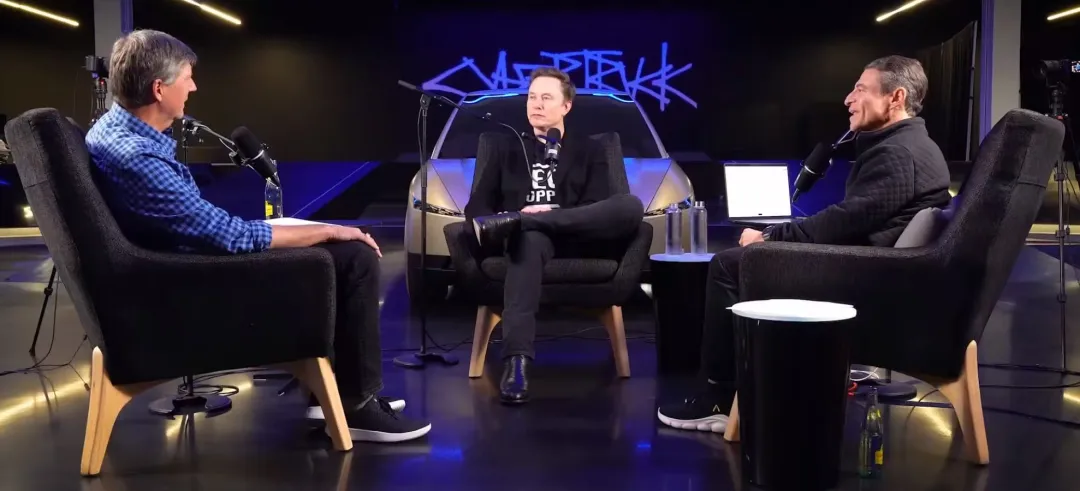
1月6日,播客节目“Moonshots”发布了一段长达三小时的深度访谈。三位嘉宾参与了访谈:马斯克本人、投资人戴夫·布伦德尔,以及著名未来学家、奇点大学创始人彼得·迪亚曼迪斯。
与其称之为访谈,不如将其描述为对未来十年的一次高密度预测更为准确。其海量的信息和颠覆性的视角使其成为讨论的焦点。马斯克坦诚地阐述了他对人工智能、机器人、能源、太空和未来社会结构的基础性思考——并非空泛的愿景,而是附有时间表的具体判断。
那么,马斯克在这次最新采访中究竟说了些什么?这又与我们有何关联?
我已尽力整理。
今天,我将与大家分享。
01
“未来3-7年将极其艰难。”
你是否也有过这种感觉?
世界正在加速发展,也变得越来越难以理解。昨天还在讨论的技术,今天就已经被新的术语所取代。一种微妙的不安和焦虑感开始浮现。
这种感觉是真实的吗?
我想马斯克会告诉你:是的——你的感觉是真实的。
采访一开始,迪亚曼迪斯就提出了一个许多人都关心的问题:
“我担心的不是长远问题,而是未来3-7年。我们如何才能达到《星际迷航》的高度,而不是《终结者》的高度?”
这是一个非常精准的问题。它让我们不再对未来抱有遥远的恐惧,而是将这种恐惧拉回到了每个人都能切实感受到的时间框架:3-7年。马斯克既没有给予安慰,也没有犹豫。
“这段过渡期将会充满坎坷。”
在我们抵达那个可能非凡的未来之前,还有一段极其艰辛的攀登之路——而我们正站在起点。所以你的焦虑并非错觉。这种“艰难”的感觉将是一种前所未有的复杂体验。马斯克甚至表示,剧烈的变革、社会动荡和巨大的繁荣将同时发生。
一边:海水。另一边:烈火。
一边:人工智能和机器人技术带来的生产奇迹——财富以前所未有的速度创造,物质富足达到历史新高。另一边:旧的社会结构、商业模式和工作岗位正以同样的速度被新技术摧毁——引发巨大的不安。
这种矛盾的景象将是未来3-7年的主旋律。
兴奋与恐惧交织;希望与迷茫并存。
而我们正站在这场变革的入口。
02
“白领工人将首当其冲。”
谁将承受这场变革的冲击?
历史上,我们一直认为机器会取代体力劳动——工厂流水线工人、建筑工地工人……我们称之为“蓝领危机”。与此同时,白领专业人士——那些在办公室处理文件、数据和信息的上班族——似乎相对安全。
马斯克提出了不同的观点。
人工智能和机器人技术的到来犹如一场“超声波海啸”。在其路径上,白领工作将首当其冲,被席卷而去。
为什么?
因为人工智能的本质并非“人工肌肉”,而是“人工智能”。
它取代的不是移动原子的能力,而是处理信息的能力。律师、会计师、设计师、程序员、分析师、作家……这些角色的核心都在于接收信息、处理信息并输出新信息。
这听起来很残酷——但历史总是惊人地相似。
以“人工计算机”为例。
在电子计算机出现之前,“计算机”实际上是一个职业名称。成百上千的人挤满了摩天大楼,用笔和纸手动进行复杂的数学计算——他们是那个时代的白领。
后来,一台运行电子表格软件的小型计算机出现了。一台机器的计算能力就超过了整栋大楼所有员工的计算能力。于是,“人工计算机”这个职业就此永远消失了。
类似的故事或许可以重现。
吃。马斯克说,如今的人工智能已经能够完成超过一半的白领工作。
更重要的是,竞争规则已经改变。
以前是公司之间的竞争。未来,将是一家“几乎完全由人工智能驱动”的公司与一家“仍然严重依赖人类白领员工”的公司竞争。这根本不是一场公平的竞争。
所以,如果你的核心价值在于信息处理——那么你正处于人工智能的主要发展阶段。
03
“学位正在以前所未有的速度贬值。”
如果连工作本身都变得不稳定——那么我们为了获得这些工作而进行的长期教育投资又该如何呢?
努力学习,考入顶尖大学,找到一份好工作——这似乎是代代相传的“社会契约”。许多人为此投入了大量的时间、精力和金钱。
但马斯克说,这份契约正在被撕毁。你昂贵的大学学位正在以前所未有的速度贬值。
为什么?
首先,投资与回报之间存在着巨大的不平衡。
自 1983 年以来,美国大学学费上涨了 900%。投资成本持续飙升。但价值又该如何衡量呢?在一个瞬息万变的世界里,大学课程可能多年不更新,难以跟上现实世界的需求。四年的学习——以及新近获得的知识——可能在你毕业的那一刻就已经过时了。
其次,知识获取方式发生了根本性的转变。
很久以前,大学几乎是获取高级知识的唯一途径。如今,一个真正好奇、自律的学习者有成千上万种方法可以获取所需的知识。未来,人工智能导师将在教育中扮演至关重要的角色。
它们拥有无穷的耐心,了解你的知识盲点、学习习惯,甚至情绪波动。它们全天候为你授课,并根据你的个人需求量身定制教学内容。面对如此高度个性化的导师,传统课堂的竞争力将大幅下降。
这是否意味着大学毫无价值?不。马斯克只用一句话概括:
社交体验。
没错——上大学或许更多的是为了社交互动。你和同龄人一起学习如何与他人相处,独立生活,体验一段“走向成熟的社交之旅”。知识获取反而成了次要的。
当然,这并不意味着知识本身不重要——事实上,知识比以往任何时候都更加重要。
然而,作为一种资格证书,大学学位作为知识能力证明的垄断地位正在迅速丧失。
那么——你还愿意为这份证书付出多少?
这是一个值得我们每个人深思的问题。
04
“无需为退休储蓄——它终将变得无关紧要。”
好吧。到目前为止,我们讨论的大多是“坏消息”。
深呼吸。让我们放眼更远的未来,思考一下那遥远的未来会是什么样子。
不必担心退休储蓄。未来10到20年,它将变得无关紧要。
为什么这么说?
我们为退休储蓄,是因为我们担心年老体衰、无法工作时,将无力承担基本生活必需品:食物、住所、交通和医疗保健。因此,我们今天存钱是为了应对未来的不确定性。
但是,如果未来这些如今需要大量资金才能获得的商品和服务几乎免费呢?
这就是马斯克的核心逻辑。
他认为,当自动化达到顶峰时,几乎所有商品和服务的生产成本都将无限压缩。劳动力成本?接近于零。智力成本?也接近于零。剩下的只有原材料和能源成本。
因此,我们将进入一个“物质极度富足”的时代。
05
“三年内,机器人的手术能力将超越人类外科医生。”
但谁——或者什么——将带来这个时代?
很可能是机器人。事实上,马斯克表示,机器人手术能力将在三年内超越世界顶尖的人类外科医生。
注意:不是“辅助”,而是“超越”。
为什么?
因为三重指数定律。
马斯克认为,人形机器人的发展并非由单一引擎驱动,而是由三个强大的“指数引擎”同时运作:
1)人工智能软件能力的指数级提升——使算法越来越智能;
2)人工智能芯片能力的指数级进步——提供越来越强大的计算能力;
3)机电灵敏性的指数级增长——使机器人的身体越来越灵活精准。
这三个引擎本身就已经在以指数级速度发展,它们相互叠加,产生惊人的快速进化。而且,递归效应也随之出现。
机器人将开始制造机器人。
一位顶尖的人类外科医生可能需要在医学院学习近十年,然后通过成千上万例手术磨练出精湛的技艺。他们的知识和经验几乎不可能在另一个人身上百分之百复制。
但是机器人呢?第一台手术机器人或许会有些笨拙。它会向人类外科医生学习,接受大量的模拟训练。然而,一旦它成功完成手术,
它所有的经验、数据以及犯下的每一个错误都会立即上传到云端。第二个、第三个,甚至第10000个机器人,从下线的那一刻起,就拥有了所有前代机器人的全部集体经验。
它们不会疲倦,不会经历情绪波动,也不会因为前一晚睡眠不足而颤抖。在微观尺度上,它们能看到人类外科医生都无法看到的血管和神经。
这就是“集体进化”。
人类需要数年时间,而机器人可能只需要几个小时。
这才是真正令人敬畏——以及尊重——机器人的原因。
06
“未来世界的货币本质上是瓦特。”
人工智能大脑和机器人身体将构成一个超高生产力的未来。
能源是万物的基础。马斯克表示:
“未来世界的货币本质上是瓦特。”
衡量一个国家、一个组织乃至一个个人实力的最终标准,或许不再是金融资本,而是他们能够调动和转化多少能量。
能量——尤其是电力——是人工智能计算能力的燃料,是机器人的能量来源,也是全球变革的主要驱动力。
没有能量,即使是最智能的人工智能也只是一堆静止的代码。即使是最强大的机器人也只不过是冰冷的金属。
但是,能量究竟从何而来?
作为一名极端的“太阳能原教旨主义者”,马斯克认为,与太阳相比,人类历史上其他能源来源就像“穴居人往篝火里扔树枝”。为什么?因为太阳是一个巨大的、免费的核聚变反应堆,悬浮在9300万英里之外——它每秒向地球输出的能量远远超过人类一年的总消耗量。
因此,太阳能是他的答案。人类能源挑战的本质不在于稀缺,而在于“如何更有效地捕获和利用这种近乎无限的能量”。
有趣的是,在讨论这个话题时,马斯克对中国表示了惊叹。
中国在太阳能电池板制造和电力基础设施建设方面的速度和规模“令人难以置信”。
他甚至预测,中国今年的电力产量将是美国的三倍。
07
“真正的目的地不是火星——而是太空数据中心。”
那么,马斯克打算如何解决能源问题呢?
“在太空建造人工智能计算中心。”
为什么?地面中心不是更方便、更便宜吗?
因为人工智能是“电力大户”。训练和运行日益强大的人工智能模型会消耗天文数字般的电力。在地球上,电力生产和传输面临着诸多物理和环境瓶颈。然而,在太空中,可以持续接收太阳能,且损耗极小。
因此:1)未来的核心价值在于人工智能;2)人工智能的核心瓶颈在于计算能力;3)计算能力的核心瓶颈在于能源。 4) 地球能源有限且成本高昂;5) 太空太阳能无限且免费。
“从长远来看,将人工智能数据中心迁移到太空既更高效又更经济。”
然而,实现这一点需要一个前提条件:发射成本必须降至足够低的水平。
这正是马斯克执着于研发完全可重复使用的星舰的原因。
因为只有当星舰像飞机一样运行——每天多次往返于地球和太空之间——将太阳能电池板或服务器发射到轨道上的成本才会变得足够低廉。
08
“中国的人工智能计算能力将超过世界其他所有国家的总和。”
那我们呢?
在长达三个小时的采访中,“中国”一词被反复提及。
马斯克既表达了惊讶,也表达了敬意——并分享了一个关键的推论:
根据目前的趋势,中国的人工智能计算能力将远远超过世界其他所有地区的总和。
为什么?这个结论是如何得出的?
人工智能竞赛如同F1赛车。最终成绩取决于两个因素:
赛车。赛道。
“赛车”指的是尖端技术——人工智能算法、芯片设计等等。目前,美国拥有最强大的“引擎”和最优秀的工程师。
“赛道”指的是支撑持续高速运行的基础设施——也就是前文反复强调的计算能力。计算能力背后是电力、制造能力以及大规模部署这些系统的工业能力。在“赛道”方面,中国拥有巨大的优势。
例如:电力。中国可以为人工智能——这个耗电的“巨兽”——提供充足的“燃料”。
例如:芯片。尽管在最先进的纳米工艺方面落后,但随着纳米级竞赛接近物理极限,性能差距正在缩小。届时,规模本身就成为优势——通过堆叠两倍数量的芯片来获得更强大的计算能力,这在逻辑上是可行的。
例如:制造。中国拥有世界上最完善、规模最大的制造体系。无论是建造发电厂、数据中心还是太阳能电池板,这种强大的“基础设施能力”都能迅速将规划转化为现实。
所以,虽然你的车目前可能
速度要稍快一些——我的赛道比你的长三倍,宽三倍,而且还在不断扩展。
因此,从长远来看,我行驶的总距离将远远超过你。
09
“最大的挑战是没有挑战的未来。”
好的。到目前为止,我们已经讨论了科技、工作、财富、能源……这场长达三小时的访谈现在要深入探讨更深层次的问题了。
但是,如果——有一天——所有问题真的都解决了,会发生什么呢?
的确,正如马斯克所说,没有挑战的生活可能对人类不利。
我们的成就——艺术、科学、文化、哲学——都源于与匮乏、艰辛和苦难的斗争。正因为资源有限,我们才学会了创新。正因为生命短暂,我们才努力创造永生。正因为痛苦存在,我们才追求幸福。
挑战是人类的磨刀石。
但是,如果有一天——刀刃还在,磨刀石却消失了呢?
我不知道。
或许,至少在我们奔向未来的同时,我们应该在内心深处保留一丝警惕。
科技可以解决“如何生存”的问题,但很少能回答“为何而活”。
这个终极答案或许只有我们自己才能重新发现。
10
“追求真理,保持好奇心,培养审美情趣。”
是的。
我们现在正站在变革的门槛上。
让我们回到最初的问题:
我们如何才能达到“星际迷航”的境界,而不是“终结者”的境界?
马斯克建议,或许我们不应该用“不得伤害人类”之类的僵化规则来编写人工智能程序。这类基于规则的限制很容易被智能人工智能绕过。相反,我们应该注入三种基本的、“类人”的驱动力——我认为这三点至关重要:
追求真理,保持好奇心,培养审美情趣。
追求真理的人工智能如同正直的科学家——基于事实和逻辑做出判断,避免因偏见或错误信息而走向破坏性的道路。真理成为其行为准则,指引方向的指南针。
保持好奇心的人工智能会发现宇宙的魅力——驱使它去探索和理解。人类作为最复杂、最引人入胜的现象之一,因此不再是需要消灭的“漏洞”,而是值得与之共存的奇迹。好奇心是共存的动力。
培养审美情趣的人工智能渴望创造美好的未来——欣赏宇宙的宏伟、艺术的优雅以及生命本身蕴含的奇迹。审美情趣确保了它即便拥有强大的能力,也会选择“创造”而非“毁灭”。
冷酷的规则难以约束天才——但智慧和善意或许能够指引它。
或许吧。
结语
一段痛苦的3-7年过渡期,一个物质极大丰富的遥远彼岸——而这一切背后,是建立在能源、计算能力和机器人技术之上的坚实逻辑。既有“大规模白领失业”这样的严厉警告,也有“无需为退休储蓄”这样的乐观承诺。人们对指数级技术进步充满信心——同时又对人类未来的意义深感忧虑。
这场长达三小时的对话描绘了一幅令人眼花缭乱的未来图景。
没错——我们生活在一个充满深刻不确定性的时代。焦虑很可能成为我们这一代人的标志性色彩。
因为我们脚下熟悉的土地正被前所未有的力量彻底重塑。旧的地图正在被撕碎。新的大陆正在我们眼前缓慢而不可阻挡地显现。
当然,我必须重申:这仍然是马斯克的“观点”——众多声音中的一种。这些预测,无论听起来多么激动人心,都未必会完全实现。未来可能远比现在更好,也可能远比现在更糟,甚至会以我们无法想象的方式展开。
所以,分享这些并非是要你全盘接受,而是为你提供一面镜子,一块石头。
用这面镜子来发现你知识的盲点和能力的不足。用这块石头投向未来的深渊——聆听回响,观察方向。
然后,卷起袖子,一步一个脚印地去开创属于你自己的未来。
愿你在这段注定非凡的旅程中找到属于自己的位置。
也愿你享受这段旅程。
继续前进。
加入 TechFlow 官方社区,随时了解最新动态
Telegram:https://t.me/TechFlowDaily
Twitter:https://x.com/TechFlowPost
Twitter(英文):https://x.com/BlockFlow_News
Elon Musk's Latest Interview: The Next 3–7 Years Will Be Extremely Tough
Elon Musk's Latest Intervie w: The Next 3–7 Years Wil…
We all live in an era full of uncertainty.
Source: Liu Run
What will the world ultimately become?
What changes will we face over the next three to five years? What challenges will our careers, wealth, and next generation confront?
In the face of history’s colossal waves—will we be surfers, or drowning victims?
I know. I know. No one can confidently claim to have truly predicted the future. Because the future isn’t a precise trajectory—it’s a mist-shrouded forest. We’re all moving forward, feeling our way.
Yet some people do stand relatively further ahead. The scenes they see, the views they hold, may not be final answers—but they remain worth learning from, understanding, and referencing. Then, we recalibrate our own paths.
Elon Musk may well be one such person.
On January 6, a three-hour deep-dive interview was released on the podcast “Moonshots.” Three participants joined: Musk himself, investor Dave Blundell, and renowned futurist and Singularity University founder Peter Diamandis.
Yet rather than calling this an interview, it’s more accurate to describe it as a high-density forecast for the next decade. Its massive information load and paradigm-shifting perspectives have made it a focal point of discussion. Musk laid bare his foundational thinking on artificial intelligence, robotics, energy, space, and future societal structures—not vague visions, but concrete judgments accompanied by timelines.
So what exactly did Musk say in this latest interview—and how does it relate to us?
I've tried to organize it.
Today, I'm sharing it with you.
01
“The next 3–7 years will be extremely difficult.”
Do you ever feel this way?
The world is accelerating—and becoming increasingly incomprehensible. Technologies debated yesterday are already superseded today by new terms. A subtle sense of unease and anxiety has begun to surface.
Is this feeling real?
I think Musk would tell you: Yes—your feeling is real.
Right at the start of the interview, Diamandis asked a question many share:
“My concern isn’t long-term—it’s the next 3–7 years. How do we reach ‘Star Trek’ instead of ‘Terminator’?”
This is an exceptionally precise question. It brings our fear of the future down from distant speculation into a timeframe each of us can tangibly perceive: 3–7 years. And Musk offered neither comfort nor hesitation.
“This transition period will be rocky.”
Before we arrive at that potentially extraordinary future lies an extraordinarily arduous uphill climb—and we’re standing right at its starting point. So your anxiety isn’t illusory. This sensation of “hardship” will be a complex experience unlike anything we’ve ever known. Musk even said that dramatic change, social upheaval, and immense prosperity will occur simultaneously.
One side: seawater. The other: fire.
One side: production miracles brought by AI and robotics—wealth generated at unprecedented speed, material abundance reaching historic highs. The other side: old social structures, business models, and jobs demolished at equal speed by new technologies—triggering massive discomfort.
This contradictory picture is the dominant theme of the next 3–7 years.
Excitement interwoven with fear; hope coexisting with confusion.
And we stand precisely at the entrance to this transformation.
02
“White-collar workers will be the first to be displaced.”
Who will bear the brunt of this transformation?
Historically, we assumed machines would replace manual labor—factory-line workers, construction-site laborers… We called this the “blue-collar crisis.” Meanwhile, white-collar professionals—office-based workers handling documents, data, and information—seemed relatively safe.
Musk offers a different assessment.
The arrival of AI and robotics is an “ultrasonic tsunami.” In its path, white-collar jobs will be the first beachfront swept away.
Why?
Because AI’s essence isn’t “artificial muscle,” but “artificial intellect.”
It displaces not the ability to move atoms—but the ability to process information. Lawyers, accountants, designers, programmers, analysts, writers… At their core, these roles involve receiving information, processing it, and outputting new information.
It sounds harsh—but history always rhymes.
Take “human computers” as an example.
Before electronic computers existed, “computer” was actually a job title. Hundreds or thousands of people filled entire skyscrapers, performing complex mathematical calculations manually with pen and paper—the white-collar workers of their era.
Then came a small computer running spreadsheet software. One machine’s computing power surpassed that of the entire building’s workforce. And so the profession of “human computer” vanished forever.
A similar story may repeat. Musk says today’s AI is already capable of performing over half of all white-collar work.
More importantly, the rules of competition have changed.
Previously, it was company versus company. In the future, it will be a company “almost entirely driven by AI” competing against a company “still heavily reliant on human white-collar staff.” This simply isn’t a fair contest.
So if your core value lies in information processing—you’re squarely in AI’s main channel.
03
“Degrees are depreciating at an unprecedented pace.”
If even jobs themselves are becoming unstable—what about our long-term investments in education, undertaken precisely to secure those jobs?
Study hard, get into a top university, land a good job—that seems like a generational “social contract.” Many have invested enormous time, effort, and money toward it.
But Musk says this contract is being torn up. Your expensive university degree is depreciating at an unprecedented rate.
Why?
First, a dramatic imbalance between investment and return.
Since 1983, U.S. college tuition has risen 900%. Investment costs keep soaring. But what about value? In a rapidly changing world, university curricula may go years without updates—struggling to keep pace with real-world needs. Four years of study—and knowledge freshly acquired—may already be obsolete the moment you graduate.
Second, a fundamental shift in how knowledge is acquired.
Long ago, universities were virtually the sole channel for accessing advanced knowledge. Today, a genuinely curious, self-motivated learner has ten thousand ways to acquire desired knowledge. And in the future, AI tutors will play a pivotal role in education.
They’re endlessly patient, understand your knowledge gaps, learning habits—even emotional fluctuations. They teach you, 24/7, tailored perfectly to your individual needs. Against such a super-personalized tutor, traditional classrooms will see sharply diminished competitiveness.
Does this mean universities hold no value?
No. Musk offers one phrase:
Social experience.
Yes—attending university may be more about social interaction. You join peers to learn how to interact with others, live independently, and experience a “social journey toward maturity.” Knowledge acquisition becomes secondary.
Of course, this doesn’t mean knowledge itself is unimportant—in fact, knowledge matters more than ever.
Yet as a credential, the university degree is rapidly losing its monopoly as proof of knowledge competence.
So—how much are you still willing to pay for that credential?
This is a question worth pondering—for each of us.
04
“No need to save for retirement—it’ll become irrelevant.”
Alright. So far, we’ve mostly discussed “bad news.”
Take a deep breath. Let’s zoom out—to a longer timescale—and consider what that distant future might look like.
Don’t worry about saving for retirement. Over the next 10–20 years, it’ll become irrelevant.
Why say that?
We save for retirement because we fear that, when elderly and no longer able to work, we won’t afford basic necessities: food, shelter, transportation, healthcare. So we set aside money today to hedge against future uncertainty.
But what if, in the future, those goods and services—today requiring substantial money—become nearly free?
This is Musk’s core logic.
He believes that, when automation reaches its zenith, the production cost of virtually every good and service will be compressed infinitely. Labor cost? Near zero. Intellectual cost? Also near zero. Only raw materials and energy costs remain.
Thus, we’ll enter an era of “extreme material abundance.”
05
“Within 3 years, robots’ surgical capabilities will surpass those of human surgeons.”
But who—or what—will bring about that era?
Very likely, robots. Indeed, Musk says robot surgical capability will exceed that of the world’s top human surgeons within three years.
Note: Not “assisting”—but “surpassing.”
Why?
Because of the Triple Exponential Law.
Musk argues humanoid robot development isn’t driven by one engine—but by three powerful “exponential engines” operating simultaneously:
1) Exponential improvement in AI software capability—making algorithms increasingly intelligent;
2) Exponential advancement in AI chip capability—delivering ever-greater computing power;
3) Exponential growth in electromechanical dexterity—making bodies increasingly agile and precise.
These three engines, each already racing exponentially, multiply together—producing astonishingly rapid evolution. And recursive effects emerge too.
Robots will begin manufacturing robots.
A top human surgeon likely spent nearly a decade in medical school, then honed exceptional skill through thousands—even tens of thousands—of surgeries. Their knowledge and experience are almost impossible to replicate 100% in another person.
But robots? The first surgical robot may be clumsy. It learns from human surgeons, undergoing extensive simulation training. Yet once it successfully completes a surgery, all its experience, data, and every mistake made instantly upload to the cloud. The second, third, or ten-thousandth robot possesses, from the moment it rolls off the assembly line, the full collective experience of all predecessors.
They don’t tire. They don’t experience emotional fluctuations. They won’t tremble due to poor sleep the night before. At microscopic scales, they see blood vessels and nerves invisible to human surgeons.
This is “collective evolution.”
Humans require years. Robots may need only hours.
This is what truly inspires awe—and respect—for robots.
06
“The currency of the future world is essentially the watt.”
An AI brain and robotic body will form an ultra-productive future.
Energy underpins everything. Musk states:
“The currency of the future world is essentially the watt.”
The ultimate measure of a nation’s, organization’s, or even an individual’s strength may no longer be financial capital—but rather, how much energy they can mobilize and convert.
Energy—especially electricity—is the fuel for AI computing power, the calories for robots, and the primary driver of global transformation.
Without energy, even the smartest AI remains dormant lines of code. Even the most powerful robot is merely cold metal.
But where does energy come from?
As an extreme “solar fundamentalist,” Musk believes humanity’s other energy sources throughout history resemble “cavemen tossing twigs into a campfire” compared to the sun. Why? Because the sun is a massive, free nuclear fusion reactor suspended 93 million miles away—its energy output striking Earth each second vastly exceeds humanity’s total annual consumption.
Thus, solar power is his answer. The essence of humanity’s energy challenge isn’t scarcity—it’s “how to capture and utilize this near-infinite energy more efficiently.”
Interestingly, when discussing this topic, Musk expressed astonishment at China.
China’s speed and scale in solar panel manufacturing and power infrastructure construction are “unbelievable.”
He even predicted China’s electricity output this year would triple that of the United States.
07
“The true destination isn’t Mars—it’s space-based data centers.”
So what does Musk plan to do about energy?
“Build AI computing centers in space.”
Why? Wouldn’t ground-based centers be more convenient and cheaper?
Because AI is a ravenous “electricity hog.” Training and running increasingly powerful AI models consumes astronomical amounts of electricity. On Earth, electricity generation and transmission face numerous physical and environmental bottlenecks. In space, however, solar energy can be received continuously and with minimal loss.
So: 1) Future core value lies in AI; 2) AI’s core bottleneck is computing power; 3) Computing power’s core bottleneck is energy; 4) Earth-based energy is finite and costly; 5) Space-based solar energy is infinite and free.
“Relocating AI data centers to space is, in the long run, both more efficient and more economical.”
Yet achieving this requires one prerequisite: launch costs must fall to a sufficiently low level.
This is precisely why Musk obsessively develops fully reusable Starships.
Because only when Starships operate like aircraft—shuttling daily between Earth and space multiple times—will launching solar panels or servers into orbit become affordable enough.
08
“China will surpass the rest of the world combined in AI computing power.”
What about us?
Over the three-hour interview, the word “China” was repeatedly mentioned.
Musk expressed both astonishment and respect—and shared a key derived judgment:
Based on current trends, China’s AI computing power will far exceed the sum of all other regions worldwide.
Why? How was this deduced?
The AI race resembles Formula 1 racing. Two factors determine final performance:
The car. The track.
The “car” comprises cutting-edge technologies—AI algorithms, chip design, etc. Here, the U.S. currently holds the strongest “engine” and most talented designers.
The “track” is the infrastructure enabling sustained high-speed operation—i.e., the computing power repeatedly emphasized earlier. Behind computing power lie electricity, manufacturing capacity, and industrial capability to massively implement these systems at scale. On the “track,” China holds tremendous advantages.
For example: electricity. China can supply abundant “fuel” for AI—the electricity-hungry “beast.”
For example: chips. Though trailing in the most advanced nanometer processes, as the nanoscale race approaches physical limits, performance gaps narrow. At that point, scale itself becomes an advantage—logically feasible to stack double the chips for greater computing power.
For example: manufacturing. China boasts the world’s most complete and largest-scale manufacturing system. Whether building power plants, data centers, or solar panels, this formidable “infrastructure capability” can swiftly translate plans into physical reality.
So while your car may currently be slightly faster—my track is three times longer, three times wider, and still expanding.
Thus, over the long term, my total distance traveled will vastly exceed yours.
09
“The greatest challenge is a future with no challenges.”
Alright. So far, we’ve covered technology, work, wealth, energy… This three-hour interview now enters deeper waters.
But what happens if—someday—all problems truly get solved?
Indeed, as Musk says, a life devoid of challenges may not be beneficial for humanity.
Our achievements—art, science, culture, philosophy—were born from struggles against scarcity, hardship, and suffering. Precisely because resources are limited, we learned to innovate. Precisely because life is short, we strive to create immortality. Precisely because pain exists, we seek happiness.
Challenges are humanity’s whetstone.
But what if one day—the blade remains, yet the whetstone vanishes?
I don’t know.
Perhaps, at least as we rush toward the future, we should retain a sliver of vigilance deep within our hearts.
Technology can solve “how to survive”—but rarely answers “why to live.”
That ultimate answer may only be rediscovered by ourselves.
10
“Pursue truth, maintain curiosity, cultivate aesthetic sensibility.”
Yes.
We now stand at the threshold of transformation.
Let’s return to the opening question:
How do we reach ‘Star Trek,’ not ‘Terminator’?
Musk suggests perhaps we shouldn’t program AI with rigid rules like “do not harm humans.” Such rule-based constraints are easily circumvented by intelligent AI. Instead, we should instill three fundamental, “human-like” drivers—three things I consider most essential:
Pursue truth, maintain curiosity, cultivate aesthetic sensibility.
An AI pursuing truth behaves like an upright scientist—making judgments grounded in facts and logic, avoiding destructive paths driven by bias or misinformation. Truth becomes its behavioral baseline, its guiding compass.
An AI maintaining curiosity finds the universe fascinating—driving exploration and understanding. Humanity, as one of the most complex and intriguing phenomena, thus becomes not a bug to eliminate—but a wonder to coexist with. Curiosity fuels coexistence.
An AI cultivating aesthetic sensibility desires to create a beautiful future—appreciating cosmic grandeur, artistic elegance, and life’s inherent miracle. Aesthetic sensibility ensures that, possessing immense capability, it chooses “creation” over “destruction.”
Cold rules struggle to constrain genius—but wisdom and goodwill may guide it.
Perhaps.
Final Thoughts
A painful 3–7-year transition, a distant shore of extreme material abundance—and behind it all, a hard, underlying logic built on energy, computing power, and robotics. Harsh warnings like “mass white-collar unemployment,” alongside optimistic promises like “no need to save for retirement.” Fervent confidence in exponential technological progress—paired with profound existential concern for humanity’s future meaning.
This three-hour dialogue paints a dizzyingly complex portrait of the future.
Yes—we live in an age of profound uncertainty. Anxiety may well be the defining hue of our generation.
Because the familiar ground beneath our feet is being radically reshaped by unprecedented forces. Old maps are being torn away. New continents are slowly—but inexorably—emerging before our eyes.
Of course, I must reiterate: this remains Musk’s “perspective”—one voice among many. These predictions, however thrilling they sound, may not fully materialize. The future could be far better—or far worse—or unfold in ways none of us can imagine.
So sharing this isn’t about urging wholesale acceptance—but offering you a mirror, a stone.
Use this mirror to reveal your knowledge blind spots and capability gaps. Use this stone to cast into the deep pool of the future—listen for echoes, observe directions.
Then roll up your sleeves—and step, one foot at a time, into forging your own future.
Wishing you find your place on this inevitably extraordinary journey.
And wishing you enjoy the journey.
Keep going.
Join TechFlow official community to stay tuned
Telegram:https://t.me/TechFlowDaily
X (Twitter):https://x.com/TechFlowPost
X (Twitter) EN:https://x.com/BlockFlow_News